Posts By :

Efruz ÖZHÜSREV

Frequently asked questions and answers on what is RFID

Frequently Asked Questions about RFID – 1

Frequently Asked Questions about RFID – 1 2501 1313 Efruz ÖZHÜSREV

What is Automatic Identification?

Automatic identification refers to a broad category of technologies that facilitate the identification of objects. It is often associated with automatic data collection, which involves identifying entities, gathering information about them, and storing the data in a computer system without manual counting. The primary objective of automatic identification systems is to enhance efficiency, minimize data-entry errors, and enable personnel to focus on more valuable tasks instead of manual counting. Numerous technologies fall under the umbrella of automatic identification, including barcodes, smart cards, voice identification, certain biometric technologies (such as retina scans), optical character recognition, and radio frequency identification.

RFID and Barcode systems are Automatic Identification Technologies.

What is RFID?

Radio Frequency Identification (RFID) or “Radio Frequency Identification” is the general name given to the technologies used to identify living things or objects with radio waves. There are many ways of identification, but the most common one is to connect a microchip (known as an RFID tag) to an antenna that identifies a living thing or object, and additional information can be recorded inside the RFID tag to make identification more precise. The reader converts the radio waves received from the RFID tag into data and enables data processable by transferring to a computer system.

Is it better to use RFID than barcodes?

RFID and barcodes are two distinct technologies with some similarities in their applications. The primary difference lies in their operational mechanisms. Barcodes employ a “line-of-sight” approach, necessitating the use of a scanner to read the barcode. Consequently, users must position the scanner in close proximity to the barcode for successful scanning. In contrast, RFID technology does not rely on “line-of-sight” and can read RFID tags within the range of an RFID reader.

Barcodes have certain limitations. If a barcode label is accidentally scratched, damaged, or torn, it becomes unreadable. Moreover, standard barcodes only provide information about the manufacturer and product, failing to identify the object itself or offer detailed product information. For instance, a barcode on a milk carton does not reveal its expiration date.

In contrast, RFID tags can address these limitations. RFID tags are capable of storing unique identifiers and can be read even when embedded within objects or protected by packaging materials. This enables RFID technology to provide comprehensive product tracking and control systems.

Will RFID replace the barcode?

This seems unlikely. Barcodes are efficient and cheap for some tasks, but RFID and barcode tags will co-exist for many years to come.

Is RFID a new technology?

RFID is a well-established technology that has been in use since the 1970s. Historically, it has been costly and had limited applications in enterprise settings. However, if RFID tags can be manufactured at a lower cost, they have the potential to address many of the challenges associated with barcodes. Unlike barcodes, radio waves can penetrate various non-metallic surfaces. This allows RFID tags to be easily read even when placed inside packages or protected from harsh weather conditions. Each RFID tag contains a unique serial number stored in its microchip, making it a globally unique identifier. This characteristic of RFID technology makes it an invaluable tool for product tracking and control systems.

If RFID has been around for so long and is so good, why don’t all companies use it?

Numerous companies are already capitalizing on the benefits of RFID technology. Initially, these investments were primarily focused on closed-loop systems, where products or assets remained within the company’s premises. This was due to the existence of proprietary RFID systems, which meant that an RFID tag affixed by Company A could not be read by Company B if they were using devices and systems from different manufacturers. However, over the past decade, the establishment of international standards has eliminated such incompatibilities.

Another factor driving RFID adoption is cost efficiency. When tracking products within a confined region, companies can reuse RFID tags multiple times. Conversely, in an open supply chain system, where products traverse various stages, it is essential for tags to be inexpensive since they will not be reused after being placed on packages.

In which areas is RFID most commonly used?

The potential applications of RFID technology are boundless, limited only by human imagination. While we previously associated RFID with sectors like logistics and retail, the scope has expanded significantly. Today, we cannot enumerate the sectors and projects that can leverage RFID technology, as it has enabled the realization of numerous projects that were once unimaginable. With RFID, the possibilities are endless!

What are the benefits of RFID?

RFID technology is valuable across various domains, ranging from process tracking to warehouse layout. Its primary objective is to minimize administrative errors, reduce labor lossesduring barcode scanning, mitigate internal theft, prevent shipping errors, and optimize inventory levels. Particularly in the wake of the pandemic, as warehouse and e-commerce operations have witnessed a surge in volume, it has become increasingly crucial for operators to execute error-free and expedited transactions. Currently, the most effective approach to accessing real-time warehouse and inventory records is through the utilization of RFID technologies.

How does an RFID system work?

An RFID system comprises two main components: a tag and a reader. The tag is equipped with a chip and an antenna, while the reader features its own antenna. The reader hardware emits electromagnetic waves, which are received by the tag’s antenna. In the case of a passive RFID tag, it detects the waves emitted by the reader and leverages them to activate the microchip’s circuitry. Subsequently, the microchip modifies the digital information contained within these waves and transmits it back to the reader. For more detailed information on this topic, please click “What is RFID? How RFID Works?”

Why are wave frequencies important?

Just like you use different frequencies on the radio to tune in to different channels, RFID tags and readers must be set to the same frequency for communication. RFID systems employ a wide range of frequencies, with the most common ones being low frequency (around 125 KHz), high frequency (13.56 MHz), and ultra high frequency (UHF) (860 – 960 MHz). In some applications, microwaves at 2.45 GHz are also utilized. Since radio waves behave differently at various frequencies, it is crucial to select the appropriate frequency for each application. Moreover, in recent years, RTLS labels operating at Ultra Wide Band (UWB) frequencies above microwave have become available on the market.
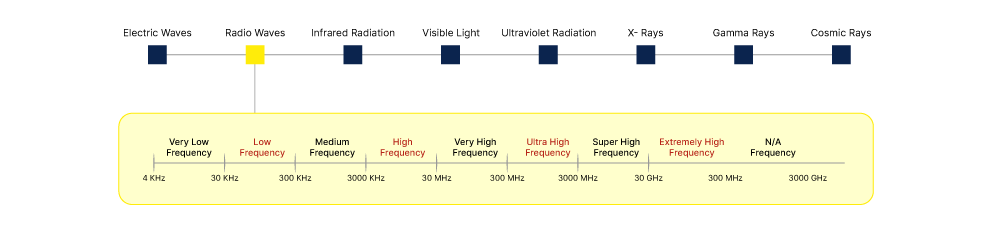
RFID radio waves frequencies

Radio waves frequencies from lowest to highest

How do I know which wave frequency is right for my system?

Different frequencies have distinct characteristics. For instance, low frequency (LF) tags consume less power and excel at detecting non-metallic objects. They are particularly suitable for items with high water content, such as fruits. However, their reading capacity is limited to a maximum range of 30-50 centimeters.

On the other hand, high frequency (HF) tags are better suited for metal objects and can also be used with items containing water. They can be read from a distance of up to 1 meter with ease.

Ultra High Frequency (UHF) tags offer a higher reading capacity and faster data transfer rates compared to low and high frequencies. However, they require direct contact with the object and rely on a clear communication path between the tag and the reader. UHF frequency tags are particularly useful for scanning boxes that enter warehouses through doors.

To ensure you select the appropriate frequency for your application, we recommend consulting with a professional consultant or system integrator.

LF RFID Systems not exceeding 10 centimeters, also called Proximity

Low Frequency (LF) systems are generally produced at 125 KHZ.
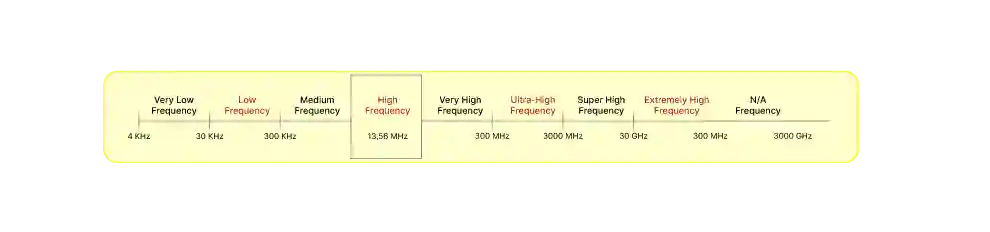
High Frequency 13.56 MHZ HF RFID Systems

13.56 MHZ is defined as high frequency.
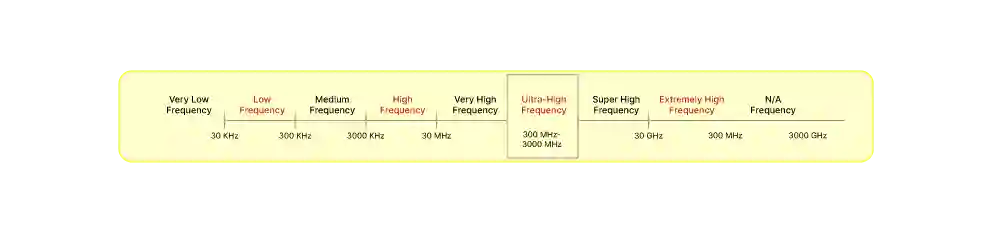
Ultra High Frequency is defined as UHF

The wave frequency defined as UHF in RFID systems corresponds to 868 MHZ.

Can RFID also be used with sensors?

Yes, it can! Certain companies employ RFID tags in conjunction with sensors that measure temperature, motion, and radiation. By integrating these sensors, some RFID tags can provide real-time information about the temperature of your boxes as they traverse your supply chain. In the food industry, RFID tags that store data such as temperature and humidity have gained widespread adoption. Additionally, sensors are utilized in passive RFID tags to mitigate electrical risks, such as sparks and electrical jumps. Consequently, passive RFID tags equipped with these sensors have become increasingly prevalent in the space and aerospace sectors.

What is the maximum amount of data that an RFID tag can store?

RFID tags can store different amounts of information, depending on the type of tag and the RFID supplier. The most basic information about an object, such as a 96-bit serial number, can fit in a simple tag that can be discarded with the packaging. These tags can only hold up to 2 KB of data, but that is enough for many applications. However, some RFID chip makers have developed more advanced tags that can store much more data and work with the EPC Class 1 Gen2 (including v2) protocol.

What are the differences between read-only and rewritable RFID tags?

There are 3 types of microchips in RFID tags: Read-only, read-write, and write-once read-many (WORM). You can add new information or change the information on the tags that have the write feature while they are in the reader’s range. The serial numbers on these tags cannot be changed. Read-only tags store data throughout production.

What are the differences between passive and active RFID tags?

The transmitter and the power supply of an active RFID tag allow it to send a signal to the reader (similar to how a cell phone communicates with a base station). Passive tags, however, do not have their own power source. They get their energy from the electromagnetic waves sent by the reader, which also stimulate the tag’s antenna. Semi-passive tags use a power source to activate the chip’s circuits, but they need the reader to communicate. Active and semi-passive tags can track high-value assets like train cars over long distances, but they are more costly than passive tags and are not suitable for low-value assets. Some companies are trying to make active tags more affordable. Passive tags are preferred by end users, as they can cost less than 15 dollar cents for 1 million tags or more.

Active, Passive and Semi-Active RFID Tags

What is read range of a typical RFID tag?

In fact, there is no such thing as a typical RFID tag and the reading distance of passive tags depends on many factors: Frequency of operation, reader power, interference with other RF devices, etc. In general, low frequency tags can be read from 0.33 m or less. High frequency tags can be read from 1 m and UHF tags from 3 – 12 meters. When greater distances are required, active tags can support 100 m and more using a power supply.

What is RFID tag collision?

This happens when multiple tags send a signal to the reader at the same time. Different systems are being developed by manufacturers to make sure that the tag responds to the reader only once. These systems include algorithms that remove duplicate tags. Since each tag is read in a fraction of a second, they seem to be read simultaneously.

What is energy harvesting?

Most passive RFID tags reflect waves back from the reader. Energy harvesting is the technique of capturing the energy from the reader for a moment and sending it back to the reader at a different frequency. This technique can significantly improve the performance of passive tags.

What is a chipless RFID tag?

Chipless RFID refers to systems that utilize radio frequencies to transmit data without relying on a serial number stored on a silicon microchip. Instead, some chipless tags employ plastic or conductive polymers as alternatives to silicon microchips. Other chipless tags leverage materials that reflect back radio waves directed at them. By detecting these reflected waves, a computer can utilize them as a unique identifier, similar to a fingerprint, to identify the tagged object.

To prevent unauthorized copying of certain confidential documents, companies are exploring the integration of fibers that reflect radio frequencies into paper. However, chipless tags utilizing these fibers have a disadvantage in supply chain applications: only one tag can be read at a time.

I heard that RFID cannot be used in metal and liquid environments. Does this mean that I can not
use RFID to track cans and liquid objects?

No, it does not. Radio waves reflect off metal surfaces at very high frequencies, while they are absorbed by water. This poses a challenge when tracking products with metal or high water content. However, this issue can be mitigated through effective system design and engineering. In such cases, low and high frequency tags are more suitable for tracking products that contain water and metal. Interestingly, there are applications where low frequency RFID tags are employed to track metal automotive parts. If you are working on projects in metal environments, it is advisable to opt for specialized products designed specifically for such applications.

Find the page that can give you the best products here.

RFID tags may not work efficiently due to reflection from metal environments and absorption in liquid environments.

What is an active reader?

Active readers are readers that can read tags by employing various frequencies or different techniques to establish communication with the reader.

What is a smart and a primitive reader?

While these terms are not universally standardized, the majority of individuals employ the term smart reader to describe a reader capable of data filtering, application execution, and support for various protocols. In essence, a smart reader is akin to a computer that can communicate with tags. Conversely, a primitive reader is a straightforward device that can read only one type of tag using a single frequency and protocol. This type of reader lacks data filtering capabilities and cannot store tag information.

What is reader collision?

A challenge associated with RFID technology is the possibility of reader collision, where the signal from one reader interferes with the signal from another. To address this issue, one approach is to divide the time into multiple passes. This means that readers communicate with tags at different times, preventing collisions. However, this approach can result in a tag being read twice when two readers overlap in a specific area. To avoid this, the system needs to be configured in a way that ensures when a tag is read by one reader, the other reader does not read it again.

For more information on choosing the right reader, you can refer to this page.

What is dense reader mode?

This mode is employed when multiple readers are used in close proximity to each other to prevent interference. Readers switch between different channels within a specific frequency range (e.g., between 902 MHz and 928 MHz in the US) and check for signals before using a channel. If a reader detects that another reader is already using the channel, it switches to another channel to avoid overlapping.

Is RFID harmful to health?

The safety of RFID devices in relation to human health depends on the tags, antennas, and the output power generated by the readers. The energy emitted by passive or active tags when they are loaded is generally considered safe for human health. However, there are specific standards for readers worldwide. In our country, the power of readers must comply with certain levels defined by the Telecommunications Authority. For instance, UHF readers currently available in Europe and our country, manufactured according to ETSI 302-208 standards, produce up to 2W power. This limit falls within the safety guidelines established by European decision makers. To ensure human health, it is recommended that individuals who need to be near the antennas maintain a distance of at least 25-30 cm from these devices. This distance is considered safe for UHF technology.

UHF, HF, Microwave. I don’t understand any of these terms. Which technology and frequency is right for me?

Making this decision requires careful consideration of your project’s specific requirements. Factors such as the type of products you intend to track, movement speeds, reading distances, and numerous other criteria should be taken into account. Our team is well-equipped to provide you with the most appropriate solution and technology tailored to your project’s needs. Feel free to reach out to us today!
What is RFID

What is RFID?

What is RFID? 2501 1313 Efruz ÖZHÜSREV

What is RFID? How is it defined?

Radio Frequency Identification (RFID) is the wireless non-contact use of radio frequency waves to transfer data. RFID systems usually consist of an RFID reader, RFID tags and antennas.

How RFID Works?

Tagging items with RFID tags allows users to automatically and uniquely identify and track inventory and assets. RFID takes auto-ID technology to the next level by allowing tags to be read without line of sight and having a read range from a few centimeters to over 20+ meters, depending on the type of RFID.

RFID has come a long way from its initial application in World War II to identify aircraft as friend or foe. Of course, not only does the technology continue to improve year over year, but the cost of implementing and using an RFID system continues to decrease, making RFID more cost-effective and efficient.

RFID Types

Within the Electromagnetic Spectrum, there are three main frequency ranges used for RFID transmissions. These are; Low Frequency, High Frequency and Ultra High Frequency.

Low Frequency RFID Systems

General Frequency Range: 30 – 300 kHz
Primary Frequency Range: 125 – 134 kHz
Reading Range: Contact – 10 Centimeters
Average Cost per Tag: US$ 0.15 – US$ 5.00
Applications: Animal Tracking, Access Control, Car Keychain, High Volume Liquid and Metal Applications
Pros: Works well near Liquids and Metals, Global Standards
Cons Very Short Reading Range, Limited Memory Quantity, Low Data Transmission Rate, High Production Cost

LF RFID Systems not exceeding 10 centimeters, also called Proximity

Low Frequency (LF) systems are generally produced at 125 KHZ.

High Frequency RFID Systems

Primary Frequency Range: 13.56 MHz
Reading Distance Close Contact – 30 Centimeters
Average Cost per Tag: USD 0.10 – 10.00
Applications: DVD Kiosks, Library Books, Personal ID Cards, Poker/Gaming Chips, NFC Applications
Pros: NFC Global Protocols, Larger Memory Options, Global Standards
Cons Short Reading Interval, Low Data Transmission Rate

High Frequency 13.56 MHZ HF RFID Systems

13.56 MHZ is defined as high frequency.

Ultra High Frequency RFID Systems

General Frequency Range: 300 – 3000 MHz
Primary Frequency Ranges: 433 MHz, 860 – 960 MHz

Ultra High Frequency is defined as UHF

The wave frequency defined as UHF in RFID systems corresponds to 868 MHZ.

There are two types of RFID available in the Ultra High Frequency range: Active RFID and Passive RFID

Primary Frequency Range: 433 MHz, (can use 2.45 GHz – under Ultra High Frequency Range)
Reading Range: 30 – 100+ Meters
Average Cost per Tag: US$ 25.00 – US$ 50.00
Applications: Vehicle Tracking, Auto Manufacturing, Mining, Construction, Asset Tracking
Pros: Very Long Read Range, Lower Infrastructure Cost (compared to Passive RFID), Large Memory Capacity, High Data Transmission Rates
Cons: High Cost per Tag, Transportation Restrictions (due to batteries), Need for Complex Software, High Interference from Metals and Liquids; Few Global Standards

In addition to active and passive RFID tags, there are also semi-active or semi-passive RFID tags defined as BAP. You can get detailed information about BAP tags from this link.

Passive RFID

Primary Frequency Ranges: 860 – 960 MHz
Reading Distance Close Contact – 25 Meters
Average Cost per Tag: USD 0.09 – USD 20.00
Applications: Supply Chain Tracking, Manufacturing, Pharmaceuticals, Electronic Tolling, Inventory Tracking, Race Scheduling, Asset Tracking
Pros: Long Reading Range, Low Cost per Tag, Wide Range of Tag Sizes and Shapes, Global Standards, High Data Transmission Rates
Cons High Equipment Costs, Medium Memory Capacity, High Interference from Metals and Liquids

Primary Subsets of Passive RFID

The relatively wide 860 – 960 MHz range is recognized as the ‘Global Standard’ for UHF Passive RFID; however, its late adoption has led to the range being further divided into two key sub-groups – 865 – 868 MHz and 902 – 928 MHz.

865 – 868 MHz – ETSI

The European Telecommunications Standards Institute (ETSI) is the governing body that sets and supports nationwide standards for communication over multiple channels, including Radio Waves, in Europe. According to ETSI regulations, RFID equipment and tags are only allowed to communicate in the smaller frequency range of 865 – 868 MHz, since other types of radio communications are allocated to subsets of the broader 860 – 960 MHz range. Our beautiful country is also subject to this regulation.

Since ETSI sets the standards for Europe, but when buying tags and equipment, the standard can be called ETSI or EU, which stands for Europe.

902 – 928 MHz – FCC

The Federal Communications Commission (FCC) is the governing body in the United States that sets and promotes nationwide communications standards through multiple channels, including Radio Waves. FCC regulations specify that RFID tags and equipment can only operate between 902 – 928 MHz because, like Europe, other types of communications are allocated to the remaining portions of the wider 860 – 960 MHz range.

RFID Equipment or Tags that are FCC certified or located in the North American Frequency Range, or NA, may be used in North America.

RFID Frekansları Tablosu

Distribution of RFID Signals by Region

Additionally;

As both ETSI and FCC were the first major standards to be approved, many countries adopted one or the other, or created their own standards in a subset of both frequency ranges. For example, Argentina chose to adopt the FCC range of 902 – 928 MHz, while neighboring Armenia chose to implement its own smaller 865.6 – 867.6 MHz band within the ETSI range.

While regional regulations such as FCC and ETSI are typically discussed using frequency ranges, there are other characteristics that each country regulates, such as the amount of radiated power (ERP or EIRP). Some countries are stricter and regulate where RFID can be used, the amount of frequency “hopping” that must be used, or that a license is required to use RFID. In our country, the Telecommunications Authority sets the standards for the use of this technology. Therefore, it may be necessary to obtain the necessary permissions from the TK as the authority for the import, installation and commissioning of related products.

*Each region needs its own regional operating frequency, contact us to find yours.

What are BAP RFID Tags and Why Didn’t They Work

What are BAP RFID Tags and Why Didn’t They Work?

What are BAP RFID Tags and Why Didn’t They Work? 2501 1313 Efruz ÖZHÜSREV

Let us first explain what a BAP tag is.

Battery Assisted Passive (BAP) tags, sometimes called Semi-Passive or Semi-Active, are essentially passive RFID tags with an internal battery. They work in a similar way to active transponder tags, as these tags wait for a signal from an RFID reader before responding. When a BAP tag receives an RF signal from an RFID reader, the internal battery turns on and supplies power to the integrated circuit (IC), which is then modulated with the tag’s relevant information. It then scatters or sends a signal back to the RFID reader in the read zone.

The tag uses its battery to send the signal much farther than traditional passive RFID tags, ranging up to about 10 meters in an ideal setting. Because it has a greater range than a passive tag (and is typically more expensive than a passive tag), but not as great a range as an active RFID tag (and is typically less expensive than an active tag), it can be considered an “advanced passive RFID tag with increased range”.

In the last 15 years, there have been many tags produced with this technology. Equipped with different battery technologies, including major manufacturers, these tags had chips compliant with the EPC Class 1 Gen 2 protocol, which is considered the ancient standard of the UHF passive RFID world. Thus, they could be read with standard UHF RFID readers even if their batteries ran out (or in applications that did not need to be read remotely). In particular, ST Microelectronic focused on the production of BAP chips compatible with the Class 1 Gen 2 protocol.

In theory it is a very bright and promising solution, but it has not been without problems. For example, with Alien readers, the desired reading performance could not be achieved (it barely reached 10 meters). We were all very happy when Impinj readers reached 20 meters. However, BAP tags were able to fulfill their real promise with Zebra-Motorola readers. With these readers, BAP tag reading distances reached 100 meters.

This was the main problem with BAP tags. Because of the incompatibility between readers (in fact, the issue stemmed from non-generic EPC Class 1 Gen 2 commands and some reader manufacturers could not activate BAP tags because they did not embed these special commands in their systems), we RFID system integrators did not favor BAP tags.

Although BAP tags are cheaper than full active RFID tags in terms of price, it is still considered high for the passive RFID tag customer. Since the customer who can allocate a budget for an active RFID tag does not prefer BAP anyway, tags with this technology have become less preferred over time.

One of the last companies to insist on BAP label production was Confidex. Confidex produced the Survivor B BAP label for a long time, but the company completely exited BAP label production with a decision taken in early December 2021. At this stage, it can be said that there are no BAP label manufacturers with high reputation except for a few companies from the Far East.

Confidex RFID Etiketi

BAP RFID Tag

We recommend the Viking series products instead of this product from Confidex. Using Bluetooth Beacon technology, these tags are available in two main product categories, both standard and ultra-industrial, and have a battery life of 5+ years. You can place your online order through Altis Store to get these products at the most affordable price.

If you are confused and want to learn more about RFID technology, please click here to read our detailed article What is RFID?

What Can You Do with NFC enabled Business Card

What Can You Do with NFC-enabled Business Card?

What Can You Do with NFC-enabled Business Card? 2501 1313 Efruz ÖZHÜSREV

More and more companies are starting to use NFC business cards and their popularity is increasing day by day in the current market. Is it only companies that use business cards? Many entrepreneurs, app developers, university students and IT professionals are coming up with ideas to develop value-added applications with NFC-enabled business cards and attract people’s attention.

But what exactly can be done with NFC business cards? Is NFC as good as everyone makes it out to be? This article looks at how NFC can help your business grow and attract attention through different applications.

What are the Differences Between Traditional Business Cards and NFC-enabled Business Cards?

As we all know, business cards have been used in business life for over a hundred years, carrying information on both sides of the card. The difference with NFC is that business cards now have a third side and this third side has the ability to carry a very rich data.

You can wirelessly transmit the information inside NFC business cards to any NFC reader. And unlike traditional business cards, you can personalize them anytime and any way you want.

Have you ever wished you had another card besides the one you use all the time? Sometimes you give it to a special friend, sometimes to a neighbor you just met in a conversation, and mostly to your customers and partners in business life.

You can use different applications to communicate the information you want to share. There are two ways these business cards are usually used:

  • Your information to be shared is stored on the NFC card. The business card is brought close to any NFC reader and exchanges the information on its chip with the reader. Here, the information transferred consists of a limited amount of data on the chip.
  • The second way is to open a link, for example to a website, which is loaded on the NFC card. In this case, the (theoretically) unlimited information on the website is available to the recipient and there are no data restrictions.
NFCakıllı kartvizit dijital kart Roxcard

NFC allows you to store a lot of data on a
small business card

What are the Uses of NFC-enabled Business Cards?

  • Registering a contact directly
    With this method, all information can be saved directly as contacts with a single tap, so the user does not need to manually enter details one by one
  • Save more than phone numbers, email and website addresses!
    With your NFC business card you can route all your social media contacts and email addresses online. Thus, the details of many of the channels you use, including Instagram and Facebook, are transmitted to the other party in less than a second.
  • Direct people to subscriptions or newsletters
    You can use referral pages to get information about a newspaper, a newsletter or a product you are promoting that week. With these links that you update at certain times, you will be able to address each person you meet with the most up-to-date information.
  • Direct to apps or games
    It’s my favorite way to get people to install mobile apps that you’ve worked so hard to get them to install, but can’t get them to install! Rather than giving potential customers the name of your app, having them write it down, remembering it in the future, going to the app store and searching for it or installing it, it’s great to be able to open your app or game on their phone with a single tap.

These are just a few of the things you can do with NFC. Apart from that, some businesses share promotional cards with discount codes loaded on NFC. With NFC, you can develop business cards with brand new concepts and give them simple but groundbreaking experiences in the eyes of your customers.

Let’s also talk about the relationship between the pandemic and NFC. For example, in the first months of the pandemic, while meeting with the manager of one of my business partner companies, I presented my traditional business card to her. However, she politely did not want to take it. She said that due to the pandemic, she no longer made such exchanges and that I could send her my contact information via e-mail. If I had a business card with NFC, I would not have been in such a situation and could have found myself in the other person’s phone book at that moment. By the way, yes, the tailor cannot sew his own clothes (at least at that time).

NFC kartvizit

Different sizes of data can be loaded on
NFC tags of different capacities

And believe me, with a business card with NFC, you can even attract the attention of people who would never be interested in your business card and let them experience this technology. And what happens? Maybe instead of being a business card that will be thrown in the trash after a few minutes, you will be registered in the other person’s phone book with all your information in less than a second. Isn’t that the whole point of carrying a business card?

I am attaching here a short but important video that can be described as an introduction to NFC. I suggest you watch it at the first opportunity.

I am sharing Rox Card website where you can order your NFC enabled card by designing and personalizing it as you wish. Click to order smart business cards with fast delivery now!

Click to read FAQ About RFID and Question and Answers about NFC Technology

What is RFID Made of

What is RFID Made of?

What is RFID Made of? 2501 1313 Efruz ÖZHÜSREV

RFID technology basically consists of three components:

  • RFID Readers
  • RFID Antennas
  • RFID Tags

However, these three components are useless without software and system integration. Therefore, as important as the above three components are in a healthy RFID project, the integration of software and systems is just as important.

RFID'nin Temel Bileşenleri

RFID Reader, RFID Tag, RFID Antenna and other components

RFID Readers

RFID readers are basically produced with different technologies according to different frequencies. These can be counted as LF, HF, UHF readers. While LF and HF readers are used to identify passive RFID tags, UHF RFID readers can read passive and semi-active (BAP-Battery Assisted Passive) tags. For reading tags operating at Bluetooth and UWB frequencies, a device that is actually a tag may be sufficient. For this reason, devices used to read active tags and tags operating at microwave frequencies and above are generally not called readers. Apart from fixed RFID readers, there are also handheld terminals (mobile RFID readers). These can read from a shorter distance but are widely used especially in places where operators are on the move such as warehouses, factories and production sites. There are many RFID reader brands in the world. Click for RFID reader alternatives!

RFID Tags

As we will explain many times in these pages, RFID tags are divided into two according to their energy sources:

  • Passive RFID Tags
    There is no need to write long. RFID tags that do not work with batteries are called passive RFID tags. It is necessary to remind a very confusing issue; the passive RFID tag has nothing to do with the encoding of the chip. They can be read from 10-15 meters. HGS tags used on the windows of vehicles in traffic are the best example.
  • Active RFID Tags
    To explain in a short way, battery-powered RFID tags with a battery on it are called active RFID tags. They can be read from a longer distance (100+ meters), but they have a problem such as the battery running out. They are also expensive. The OGS tags we use in vehicles are the best example.

Click to choose the most suitable tag for your project!

RFID Antennas

They are passive devices that are attached to RFID readers and are usually supplied with 3-5 meter cables. In general, 2 or 4 antennas can be installed in an RFID reader. Some RFID readers may have 8 ports, in which case 8 antennas can be installed, or it may be possible to install more antennas with additional hardware.

There are generally linear or circular antennas on the market. If you don’t know which antenna is the most suitable for your needs, you can consult us.

If you want to learn what RFID is as well as RFID components, you can read this article.

how to optimize food supply chain

How to Optimize the Food Supply Chain?

How to Optimize the Food Supply Chain? 2560 1344 Efruz ÖZHÜSREV

With modern life and increasing levels of education, more consumers are demanding information about how the delicious food they consume ends up on their dinner plates.

Businesses that provide food to consumers also have a lot to consider. Every farmer, food business operator and vendor is responsible for some form of food management. Organizing deliveries, arranging suppliers and calculating food costs are all part of the supply chain process.

But lately, especially with the rising cost of food in our country, the details of these processes have become a matter of curiosity for almost everyone. I don’t know, maybe, at least for our country, the question of why a tomato that costs 1 lira in the field costs 20 lira in the market is more important than food safety. One way or another, making these processes properly traceable has become important for all of us.

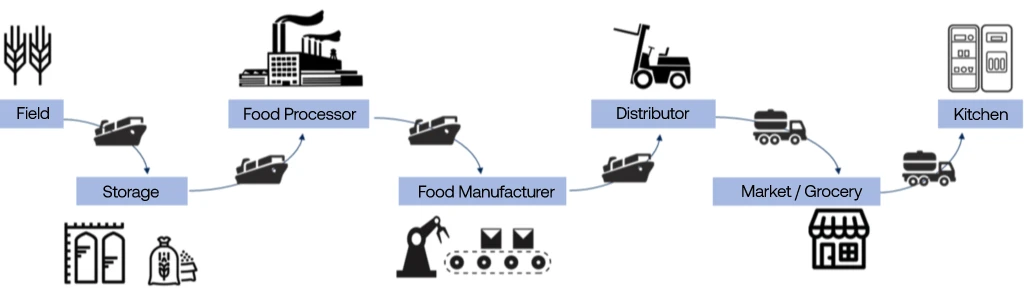
The food supply chain is complex as it involves every touch point of a food item from farm to fork. Depending on the type of food involved, there may be multiple stages in the process, such as farm, processing, distribution and retailer. Here are a few challenges this process faces and what you need to know about five ways to optimize the food supply chain.

Gıda Tedarik Zinciri ve RFID

Key Challenges for Food Supply Chains

The food supply chain is an elaborate production system that maintains food security and sustainability on both a local and global scale. While most people take food resources for granted, there is a delicate balance that can be disrupted by spoilage, scarcity and price spikes. Here are some of the main challenges facing food supply chains:

  1. Labor and Farm Shortages
    The most important and first step in the food supply chain takes place at the agricultural level. Most farming operations carry serious sustainable risks due to rising costs in our country and around the world. In addition, various regulations and restrictions have made it more costly and challenging for farms and processing plants to operate.
  2. Increasing Regulations
    Speaking of regulations, more rules have been introduced to protect workers and consumers. At the same time, some of these rules are causing obstacles in the supply chain. For example, regulations requiring drivers to record their working hours have led to higher prices and delivery delays. But more importantly, the issue is complicated by country-specific factors such as the skyrocketing fuel prices in Turkey, the need for trucks and tow trucks to drive on very expensive private highways, and the increased (actually normalized) social and administrative costs of the personnel involved in the fight against informality.
  3. Poor Communication between Stakeholders
    As the food system and supply chain is fragmented, participants have their own logistics and information systems. This makes data sharing and communication difficult, which can lead to delays and food spoilage.
  4. Inventory Management
    The lack of visibility across supply chain participants has caused many problems for grocery stores and restaurants. Without a real-time view of inventory, these businesses are under- or over-ordering, leading to food spoilage, customer dissatisfaction and brand reputation damage.
  5. Waste
    Maybe you will say, “What’s the relevance?”, but we are presented with such statistics that sometimes it is impossible to believe. The open buffet approach is already a real nuisance for our country. Apart from this, it is very sad that businesses comfortably go to waste by thinking that we are collecting the money anyway, and that consumers cannot finish the plates they fill more than necessary and cause waste. Imagine that for the first time in millions of years of human history, people are experiencing health problems and even losing their lives due to satiety rather than hunger
Food Supply Chain

Ways to Optimize the Food Supply Chain

Good supply chain management ensures that food products reach their intended destinations on time. It also helps to prevent and identify potential problems such as spoilage, contamination and foodborne illnesses before they affect consumers. There are several ways to optimize the food supply chain so you can deliver a positive customer experience and achieve better results overall.

  1. Assess and Audit Suppliers
    If your company produces, processes and transports food, you need to partner with suppliers you trust. This includes appropriately assessing and auditing suppliers against aspects such as record-keeping processes, sanitation, food safety criteria, recall programs and environmental monitoring. Once you have a relationship with suppliers, the assessment process should continue. Periodic internal audits should be conducted. If the supplier hires subcontractors, they should be examined under the same scrutiny. But first of all, you need to know what is being produced, what you are buying from your suppliers, and what quality and process you are procuring these products. The first thing to do is to identify the food produced. You can do this with RFID or barcode, which technology you will use and how you will use it or ask your suppliers to use it is a matter of your project design, but first of all, what you supply, operate or logistics is that the food is identifiable. Once you achieve this, you will be able to track spoilage rates, vulnerabilities in the supply chain, and the
    conditions that the food can tolerate.
  2. Understand Your Budget
    Whether you manage your supply chain in-house or work with a third-party logistics company (3PL). Your budget will be a constant concern as it affects your bottom line. While various programs and solutions can be costly, it is crucial to analyze the impact of implementing them or abandoning them altogether. For example, a well-managed supply chain will likely outperform the competition and gain more customers due to its positive reputation. At the same time, a poorly managed one could lose customers or even face fines due to food safety issues. This is where government regulations become important
  3. Increase Transparency and Visibility
    When essential supplies ran out early in the pandemic, companies started paying more attention to what was happening in the supply chain. Likewise, consumer interest in where their food comes from has also increased, making it important for companies to address transparency in the food supply chain. Fortunately, visibility can be achieved with a variety of technology solutions. Things like RFID tags combined with a warehouse management system (WMS) can provide partners and consumers with real-time data about food products. This technology can also help with cold chain compliance by recording the temperature and humidity of items as they move along the route. Active RFID tags with memory, so-called data loggers, can be used for this.
  4. Focus on Inventory Management
    Long gone are the days of handling inventory using a scrapbook or spreadsheet. These methods are very inefficient and error-prone. Automation and digitization are the foundations of an efficient and successful supply chain. There is too much at stake in food products to not make inventory management a priority. In fact, the last links of the food supply chain are quite competent in this regard. Supermarkets, large distributors and intermediary firms/institutions in metropolitan areas have developed their technological infrastructure admirably. Unfortunately, we do not see this so easily at the very beginning of the chain. For example, issues such as inventory management, traceability and product identification among farmers and small or large cattle producers are still very virgin. Of course, at this point, other disciplines such as finance and taxation also need to be improved, because it is really difficult to take the first step of product traceability at this stage, when there are farmers who sell milk informally and big business operators who supply milk and other
    animal products informally. In fact, my personal opinion is that the main problem stems from the insistence on informality. The natural result of making everything you produce, buy and sell traceable with RFID or barcode technologies will be real inventory management, full traceability and no tax evasion. But up to what point? In addition to the transparency that RFID tags provide, this technology can also help with inventory management. For example, a warehouse worker can use a mobile computing device to improve the accuracy and productivity of operations, creating a more efficient and cost-effective process. We have a chance in this regard; Turkish people, regardless of their profile, are very curious about technology and very eager to use it in their lives. Aligning the workforce with technology can be easily achieved, especially if they are convinced that it will make their work and processes easier.
  5. Improve Sourcing and Forecasting
    One of the biggest problems in recent times has been relying on a single source for supply. Not only in food, but even in technological products, critical products like chips, commodities, etc. When an unforeseen event occurs and that source is not available, it creates a ripple effect throughout the supply chain, consumers feel the risk and want to shop frantically (people lining up to buy Lupo biscuits, etc.), stock balances are disrupted, false feedback goes to the manufacturer and companies’ reputations are damaged. Going forward, it makes more sense to manage this risk with a multi-sourcing strategy, even if it means paying a slightly higher price or foregoing international sourcing options. By sourcing locally, shorter lead times give you more flexibility when there are spikes in demand. Of course, to manage this, you need instant and fully traceable stock levels and inventory information. The first way to do this is to use identification technologies.
RFID tags in food industry

While just-in-time (JIT) inventory models can keep costs low, this approach causes problems when there is unexpected demand for products. But whatever strategy you choose, have confidence in your forecasting methods. You also have perhaps decades of data. True, we’ve seen so much in the last few years that forecasts can be turned upside down, but once you start to ensure traceability of your product, you won’t believe how much your forecasting ability improves.

Food supply chains have a history of facing various challenges such as transportation issues, spoiled products and counterfeit products. Therefore, to optimize the food supply chain, businesses need to implement effective strategies that include the use of technology solutions to provide transparency throughout the supply chain. At the heart of this, as we said, is the use of identification technologies.

Contact us to manage your food processes with active or passive RFID tags or barcode systems.

Questions and Answers Series About NFC Technology

Question and Answer Series about NFC Technology -1-

Question and Answer Series about NFC Technology -1- 2501 1313 Efruz ÖZHÜSREV

Is there a difference between NFC and RFID?

It’s a bit about definitions and how they are used. NFC is actually an RFID technology. However, mainstream RFID technology is now used for longer distance identification technologies. HF RFID systems can identify up to 50 centimeters, UHF can identify up to 10 meters to 100 meters depending on the type, while systems defined as NFC usually cannot exceed 1-2 centimeters.

When it comes to the volume of data that can be read, RFID technology can make a serious difference to NFC. While hundreds of tags can be read at the same time with RFID, NFC aims to read one tag at a time and this is aimed to be over a short distance. Imagine what would happen if the credit cards in your pocket could be read from 5-6 meters?

RFID is a technology mostly used for “identification”.  Asset identification, inventory counting, etc. NFC is more suitable for projects such as contactless payment systems, managing after-sales product experiences, data sharing.

Maybe it’s a technical detail, but I think the most impressive difference between the two technologies is that RFID has a unidirectional communication capability, while NFC has a bidirectional communication capability according to the architecture. So what does this mean? RFID tags are just tags and they are loaded with RF signals emitted by RFID readers and they broadcast the ID of the chip on them unidirectionally with this energy. Yes, NFC also has this type of usage. For example, scanning your business card with a cell phone. But there is a second way NFC works. This is called bidirectional communication and it allows two NFC devices to interact with each other in both directions. For example, two cell phones with NFC can transfer files between themselves.

The final word is that the RFID world shares many arguments about security, but NFC has always struck me as a more secure technology. This is why no credit card has ever been produced with Class 1 Gen2 (and v2), the most widely used protocol of RFID in the world today.

Is there a difference between an NFC tag and a card?

The direct answer is no. The chip used in both is the NFC chip. The reason why some call it a card and some call it a tag has more to do with the form factor and intended use of the “thing” in question. It is true that NFC tags are attached to every product sold, but NFC cards equipped with the same NFC chip can also be used by employees in a company to use personnel access systems.

I want to develop projects with NFC but I don’t know which one to choose, what should I do?

Please don’t spend too much time on this when there is someone here who has studied these topics. Let’s start with the quickest answer. Most NFC projects are being developed around interaction with cell phones. If you are going to have an application related to smartphones in your project, my recommendation is to use an NFC tag with an NTAG chip. Because today’s NTAG series NFC systems are compatible with almost all smartphones.

Of course, if we need to go into detail, we need to talk about NFC chip types first. We can count 5 types. Let’s go through very roughly:

NFC Type 1 (ISO 14443-A) has a memory of 96 bytes. It communicates at 106 kbps. No data collision algorithms. It has read/write or read only modes. It has a low price. Not very common anymore.

NFC Type 2 (ISO 14443-A) has 48 or 144 bytes of memory. Communicates at 106 kbps. Has data collision algorithms. Read/write or read only modes. The most known productions are NXP Mifare Ultralight. It has a
low price.

NFC Type 3 (ISO 18092) has 1, 4 and 9 kilobytes of memory. Communicates at 212 or 424 kbps. It has data collision algorithms. Read/write or read only modes. The best known productions are Sony Felica. It is actually higher performance in terms of speed and capacity than Type 1 and 2, but it is not very common. For example, in all these years I have never been able to work with these chips. The most expensive chip is produced in this type.

NFC Type 4 (ISO 14443-A) has 4 or 32 kilobytes of memory. It communicates at 106, 212 and 424 kbps.

It has data collision algorithms. Its notable feature is its security capabilities. Read/write or read only modes. The most known productions are NXP DesFire. The second most expensive chip is produced in this type.

NFC Type 5 (ISO 14443-A) has 192, 768 or 3584 bytes of memory. It communicates at 106 kbps. It has data collision algorithms. Read/write or read only modes. The most known productions are NXP MiFare Classic. They are low priced.

I think that’s enough for now, let’s meet in the second part soon. We will continue with NTAG2xx, Mifare, SLIX, EM4425x, ST25x chips. Don’t worry, I will be sharing everything you need to determine the most suitable NFC technology for your project.

In the meantime, click here to review NFC tags

Differences Between Barcode and RFID technologies

Differences Between Barcode and RFID

Differences Between Barcode and RFID 2501 1313 Efruz ÖZHÜSREV

Automatic identification systems basically use various technologies that increase your productivity by facilitating your data flow. Two important options you will come across when choosing between identification systems: Barcode and RFID (Radio Frequency Identification) tanımlama sistemleridir.

When choosing which system to use, you must first clearly define your criteria and performance goals, and make your evaluation according to the characteristics of your own project.

What are the advantages and disadvantages of RFID and Barcode labels?

Usage Surfaces

Due to its technology, the performance of RFID tags varies according to the characteristics of the surface they are attached to. Barcode labels do not have such a dependency.

For example, you may need to develop special solutions because RFID tags on liquid-containing packaging or metal surfaces will not be easy to read. Since the performance of barcode labels is independent of the surface to which they are attached, such a situation does not occur. Barcode bars work correctly as long as they can be physically read, even if they are applied to a metal floor or liquid-containing material. It is an easier and trouble-free technology in terms of barcode applicability.

Reading Speed

In this regard, we can say that RFID is superior, enabling many labels to be read at the same time in milliseconds. If we consider the reading speed of the barcodes on the products passing through the checkout while shopping at a grocery store, RFID provides tens of times faster reading. According to the speed needs of your application, The fact that tens or even hundreds of RFID tags can be read simultaneously instead of one or a few barcodes is a strong reason to choose RFID.

Field of view

It is mandatory for the barcode scanner to read the barcode bars, whereas in RFID it is not necessary to have a clear view between the tag and the antenna. RFID tags can be read quickly and smoothly, even if there is paper, wood, plastic or many other types of material between the antenna and the tag. E.g., While more than one product in a parcel can be read in a few seconds with RFID, it is impossible to achieve this with barcodes. This distinguishing feature can be decisive in your RFID choice according to the needs of your project.

Reading Distance

RFID has a significant advantage in that it can provide reading at much longer distances than barcodes. Although it varies according to its type and features, passive RFID tags can be read from ten and sometimes twenty meters. In barcode systems, it is almost impossible to read from such a distance.

Deciding whether to choose barcode or RFID as an identification system in your project will be advantageous in many ways, especially in terms of cost, if you are guided by an experienced team.

Contact us to choose the most suitable solution by using your time and resources efficiently. Let’s evaluate together which technology you can use and how you can use it under the consultancy of our expert engineers who have successfully completed dozens of projects

Chip Crisis

Chip Crisis

Chip Crisis 2501 1313 Efruz ÖZHÜSREV

The production disruption caused by the COVID-19 pandemic has a major impact on the technology sector.

Although there was no serious problem in the first year of the pandemic, chip supply, one of the most important components of RFID tags, has been mentioned a lot especially after the second half of 2021 and has made itself felt in the last quarter of 2021.

Unfortunately, the most troubling consequence of this reduction was the price increase in the unit costs of RFID tags. On the other hand, due to supply problems, labels could not be supplied for some projects in spite of high budget allocation.

As of December 2021, when this article was written, there is a “relative” relief in chip supply, especially in automobile companies in the Far East. This good news will provide relief not only to those of us who work with chips but also to critical sectors such as automotive and white goods that have to use chips in almost every product. However, this information is so new that it may take a couple of months or more for to have an impact on our lives.

During this difficult period, Alien Technology and Impinj have experienced serious problems in the supply of inlays and labels. Impinj’s supply of next generation chips has also been disrupted. However, NXP/Philip, especially UCode 8 and UCode 9 chips have been released at the right time, providing some relief to the manufacturers in chip supply.

Regarding RFID readers, Impinj and Far Eastern contract/OEM manufacturers seem to have done well in this process. However, we can say that European and other US RFID reader manufacturers failed with supply periods that actually lasted 20-24 weeks.

The same situation applies to other hardware items such as RFID/barcode handheld terminals and RFID printers. Many projects have either been waiting or canceled due to supply periods that last 14-16 weeks.

If you don’t know how to distinguish RFID inlays or tags produced with clone chips during this process, please contact us. By consulting us, you can supply RFID hardware without failing neither your business nor your customers during this challenging process.

Please click to reach the most suitable RFID tags without any procurement problems!
Contact us for procurement problems and alternative solutions.

7 Tips for a Successful RFID Project

7 Tips for a Successful RFID Project

7 Tips for a Successful RFID Project 2501 1313 Efruz ÖZHÜSREV

The visits, we had done to our customers in the first years of our business, was not easy to handle. Only a few of the companies had accurate information about RFID Technology. Only some of them used to believe they could do frenetic things with RFID technology. People were dreaming of doing fantastic things with RFID like; to determine location in indoor and outdoor areas with 3-5 cents chips (I seeked for those chips and couldn’t found them for years), to ring alarms with those chips, to track interior parts of trailers from space. The reason of these great expectations are the so-called experts, who visits some websites about RFID and call themselves ‘’experts’’, but this is not today’s topic. The customers who challenged us the most were the profile which had only a fair project experience and failed. Non-competent project partner, wrong determined targets, wrong measurement and evaluation criteria, unsettled RFID technical and practical standards and other reasons like those, innovative firms, who could not transcend the technology of the day, had frustration while consuming time and money. The most difficult part is to persuade the companies in favor of the usage of RFID again.

To tell the truth, RFID projects are difficult projects to handle. Thanks that we do not have any project, which was left over or resulted with a failure. This also does not mean that, all the RFID project requests from customers can be taken over. In some cases, it is better to implement barcode or GPS solutions rather than RFID. Moreover RFID is now wide spread but we still see unsuccessful RFID projects. For that reason, I would like to share some points with you to have successful RFID projects.

1-) Manage your expectations properly

You would like to use RFID technology at work. But how? First of all, you should analyze accurately your expectations from this technology and also the skills of RFID technology.

  • Does the expectations of your company match with the RFID technology?
  • Will you be able to really realize and implement things that you need with RFID Technology?
  • Is RFID really the required technology by the company?
  • Does your managers have crackpot expectations and demands about RFID solutions?

You should answer to these questions clearly and objectively.

Answering these questions correctly will work so well that you can avoid a lot of things that can cause failure in the future.

RFID will not fit you, instead, your solution must comply with RFID

2-) Re-evaluating the Processes

There is a quote, used by me frequently and one day I will ask for copy right; “RFID will not fit you, instead, your solution must comply with RFID’’ I strongly recommend you not to struggle, instead cooperate with this technology if you would like to have productivity. Because whatever you do, RFID will do what it does. So how can you get along with RFID technology? You ought to update your business processes, the way of doing business and your business canvas. Evaluating this process with a competent RFID consultant answering the concept, scope of the RFID project, project cost, how and duration of the project, will enable you to save time and money.

3-) Documentation

In Turkey, documentation and records management is not very reputable by suppliers, customers or the companies. Documentation is an important tool and task to do, very important and necessary!

We speak about the dreams and expectations of the company for hours and hours in the first meeting with our customers. As we approach to the end of the project, the expected/planned and realized work differ. This difference between the planned and realized are not welcomed well by the customers and suppliers. The supplier can stand many unnecessary points out of the project scope, may stand resource problems in order to increase customer satisfaction and commitment. On the other hand, the expectation of the customer may not match with the realized projects and confirmation-payment process can be suffocated.

For that reason, you have to be careful about the processes of procurement and project implementation. The tag properties/features, medium properties, the environment, reading performance expectations, software ERP/WMS integration are the topics, which should be detailed and agreed upon the articles of the written contract/agreement between the customer and RFID technology provider/supplier, which is you.

This essential approach in software projects is getting more and more importance in RFID projects, because besides the software costs; hardware and costful consumables are also in the business.

For this reason, always remember to detail, commit, agree and sign under tag features/properties, environment features/properties , expectations of reading performance, software ERP/WMS integration.

This essential approach, which is important in software projects, is more important in RFID projects, because in addition to the software expenditures hardware and costly consumables are also taken into account.

After the first visit to our customers, we use a form called Project Question form to the customers, who demand for new projects. Due to the tens of questions in the file, our customers can think deeply and thoroughly and they will be able to share many details with us at the beginning of the project. Verba volant, scripta manent; wiritings remain, but words fly away. Spoken words fly away, written words remain”.

4) Site Survery

Unlike barcode projects, a successful RFID project that you see in one business may not be successful in another business in the same industry. There can be many reasons for that. For an example an RFID reader which we didn’t have any problem in many fields, caused problems in a hospital with high electromagnetic pollution. UWB systems, deck phones, wireless devices and many unimaginable things can interfere with each other and this is not a subject that we can take a risk. It is known that it is difficult to read the RFID labels in metallic environments but the metal effect in the environment sometimes unexpectedly expands-distorts the reading areas of RFID tags and this can change the flow. In fact I would say that during the site survey, simple tests of the labels should be done, because not only the materials which the labels will be attached but also the label you positioned incorrect may surprise you.

5-) Pilot

RFID Projects are relatively expensive projects. You may have a good purchase and may have chosen the most optimum offer but none of these means that you will have an RFID project that works like a clock. You can ask candidate companies you want to work with to set up a demo. This is wise but inadequate. You many not determine the suitability of the designed RFID system for your company and your business processes with one hour or daily demo work. Companies generally do not prefer to pay for this type of experience, they mostly settle for demo. The supplier can not give the desired support to the customer who wants more because of its resources. In such cases, the best thing to do is to develop a pilot. A small-scale RFID project, which is defined as key points and covers processes where the performance of RFID systems is critical, can sometimes prevent you from losing big amount of money. It is better to start with a 10 unit pilot instead of jumping into a project which would cost 100 units. This will prevent problems that may occur in the future. Pilots are also a good starting point for a change in the working culture for the instution. Pilots where you can add even more value with the feedback that will come from your employees in the field can be upgraded to the next stage without any problems if you are satisfied with their small scale. Thanks to the pilot you realized that RFID project does not fit you in this stage? Do not worry! Instead of paying higher prices, you get this experience with a small pilot.

6-) Think Hybrit!

Of course you can provide significant added value within your company by commissioning RFID projects! However, the RFID models which are too good to be true are generally models with point to point integration models. If your supplier and customers are taking the advantage of RFID technologies, you can establish a global chain and benefit deeply from the blessings of RFID. But what if such an investment is not planned on the customer or supplier side? Don’t worry, no one says ‘’You’ve upgraded to RFID, so throw the barcode away!’’. Keep the barcode technology in the game to keep the chain going! In this way, you do not have any operational problems with your other shareholders who do not use RFID and your shareholders will not be adversely affected by the systematic updates you make as they proceed with the old fashioned barcode until they upgrade to RFID.

Hybrid identification technology also makes it easier to manage departments within your company. You may not have been able to convey all of your process to RFID both due to the internalization process of RFID as a company and financial concerns. In such cases, it will be possible to provide transitions with barcode. Also RFID printers can play an important role in your hybrid scenarios while they can print barcodes and RFID tags at the same time.

7-) Tag

Let me share a secret about RFID projects: The success of an RFID project is primarily determined by the RFID tags used. Even tag technology sometimes determines whether a project will be executed or not. It is a critical decision whether tags are for multiple use or one shot in your project scenario. Apart from this active-passive tag decision will affect your budget in a dramatic way. The level of labeling (palet, parcel, box, product levels) can determine whether your project will be truly feasible or not. For all these reasons, you should constantly experience tag types, models and features on your site from the first stage of your projects and observe this criterion in your most optimal RFID scenario.

Best PRICES For RFID Products
Visit Altis Store now to purchase the most wanted products at affordable rates.